
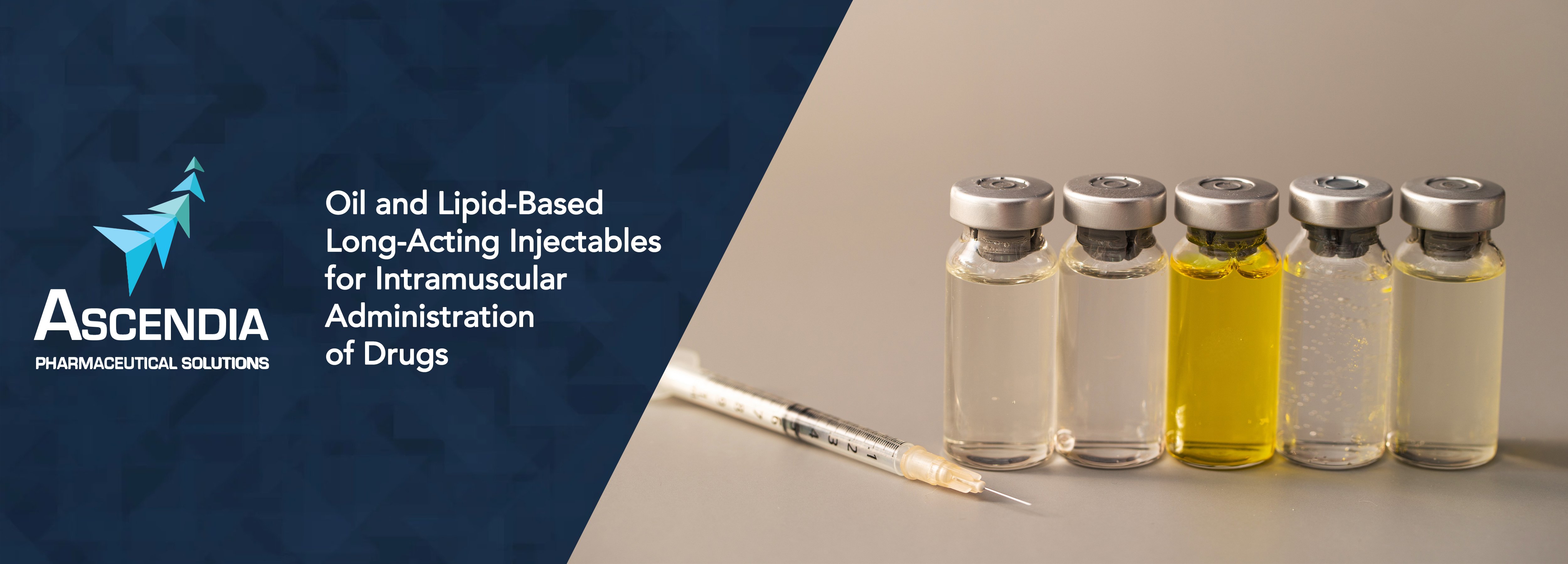
Long-acting injectables (LAIs) release a drug slowly over weeks to months from a single injection. This cuts dosing frequency and helps patients stick with treatment, especially in chronic conditions like schizophrenia, hormone deficiency, and breast cancer. This review covers oil- and lipid-based LAIs given by intramuscular (IM) injection, a field that began when Squibb launched an antipsychotic depot in 1957.
The authors describe several types of formulation:
- Oil solutions. The drug, often a fatty-acid ester prodrug such as haloperidol decanoate or testosterone undecanoate, is dissolved in an oil such as castor, sesame, cottonseed, coconut, or peanut oil, or medium-chain triglycerides.
- Oil suspensions. These are possible, but no marketed products exist because of injection pain and stepwise release.
- Oleogels. Oils are structured with gelators such as 12-hydroxystearic acid, aluminum stearate or tripalmitin to form a semi-solid depot.
- Lipid assemblies. These include liposomes, solid lipid nanoparticles (SLN), nanostructured lipid carriers (NLC), and cubosomes.
- Lyotropic liquid crystals. Cubic, hexagonal, and lamellar phases release drug through aqueous nanochannels.
How many are marketed oil or lipid-based LAI?
The article lists 17 marketed oil-based products, including Faslodex, Nebido, Depo-Testosterone, Haldol Decanoate, and Naldebain ER.
How is drug release from an oil or lipid-based LAI?
Release depends on how the drug partitions between oil and tissue, how fast it diffuses, how large the depot surface is, and how quickly esterases convert prodrugs back to the parent drug. Higher oil viscosity can slow release. Absorption runs in stages and starts after a lag, and lipophilic drugs may be taken up through the lymphatics. Published studies show longer release from oleogels than from simple solutions. Examples include leuprolide over 96 hours, bupivacaine with about four times longer anesthesia, and leuprolide in sorbitan monooleate liquid crystals over about one month.
How is oil or lipid-based LAI manufactured and tested?
Particles are made by top-down methods (high-pressure homogenization, wet milling up to 400 mg/mL) or bottom-up methods (precipitation, emulsion, solvent evaporation). Oil solutions are typically filtered and then dry-heat sterilized. Heat-sensitive drugs need aseptic processing. Characterization uses polarized light microscopy, SAXS/WAXS, DSC, and rheology. In vitro release is measured by dialysis or USP Apparatus 1, 2, or 3, but there is no pharmacopeial method for IM depots.
What are the Key challenges of oil or lipid-based LAI?
Injection pain, viscosity and syringeability, solvent-related muscle damage, Ostwald ripening, stability, and weak in vitro–in vivo correlation (IVIVC). The authors conclude that oleogels and liquid-crystal systems are the most promising next-generation platforms. They note that Ascendia Pharmaceutical Solutions supports this work with its NanoSol®, EmulSol®, and LipidSol® technologies and GMP aseptic manufacturing.
Frequently Asked Questions
What are oil-based long-acting injectables?
They are injections in which a drug, usually a lipophilic fatty-acid ester prodrug, is dissolved or suspended in an oil and injected into muscle. The oil forms a depot that releases the drug over weeks to months. Examples include haloperidol decanoate in sesame oil, testosterone undecanoate (Nebido) in castor oil, and fulvestrant (Faslodex) in castor oil.
Which oils are used in intramuscular long-acting injectables?
The common oils are castor, sesame, cottonseed, coconut, peanut, soybean, and corn oil, plus medium-chain triglycerides. Cosolvents such as benzyl alcohol may be added to improve solubility and lower viscosity.
How do oil-based depot injections control drug release?
Release is governed by the drug’s oil/tissue partition coefficient, its diffusion rate through the oil, the depot’s surface area and, for prodrugs, esterase hydrolysis back to the active drug. Longer fatty-acid ester chains and more viscous oils generally slow release.
What is an oleogel injectable?
An oleogel is an oil turned into a semi-solid depot by gelators such as 12-hydroxystearic acid, aluminum stearate, tripalmitin or glyceryl monostearate. The gel network slows diffusion. In published studies, oleogels extended leuprolide release to 96 hours and bupivacaine anesthesia to about four times longer than the free drug.
What lipid-based systems are used for long-acting injections?
They include liposomes, solid lipid nanoparticles (SLN), nanostructured lipid carriers (NLC), cubosomes and lyotropic liquid crystals. Liquid-crystal systems based on glyceryl monooleate, phytantriol, or sorbitan monooleate can form a depot in place and release drug through aqueous nanochannels for up to about a month.
What are the main challenges in developing oil and lipid LAIs?
The main challenges are injection-site pain, high viscosity that limits syringeability, solvent toxicity, particle growth (Ostwald ripening), physical and chemical stability, and the lack of a standard in vitro release method. That last gap makes IVIVC difficult.
How is in vitro release tested for long-acting injectables?
The usual methods are dialysis bags in a USP Apparatus 2 bath, USP Apparatus 1 (basket), USP Apparatus 2 (paddle) with a sample mold, USP Apparatus 3 (reciprocating cylinder), and non-membrane methods. No pharmacopeial method has been established for IM depot products.
How are oil-based injectables manufactured and sterilized?
The drug is dissolved in the oil, membrane-filtered to reduce bioburden, and dry-heat sterilized, for example at 121 °C for 15 minutes. Heat-sensitive drugs are made aseptically. Nanoparticle and suspension forms use high-pressure homogenization, wet milling, or bottom-up precipitation.
Why choose a long-acting injectable over daily oral dosing?
LAIs reduce dosing from daily to every few weeks or months. This improves adherence, lowers pill burden, and gives steadier drug levels, which matters most in schizophrenia, hormone therapy, and oncology.
Who can help develop an oil or lipid-based long-acting injectable?
Ascendia Pharmaceutical Solutions (North Brunswick, NJ) develops LAIs using its NanoSol®, EmulSol®, and LipidSol® platforms. It offers top-down and bottom-up particle engineering, aseptic GMP manufacturing, and lyophilization.